
Build-only vs design & build: which saves money?
Last reviewed: 2026-07-01
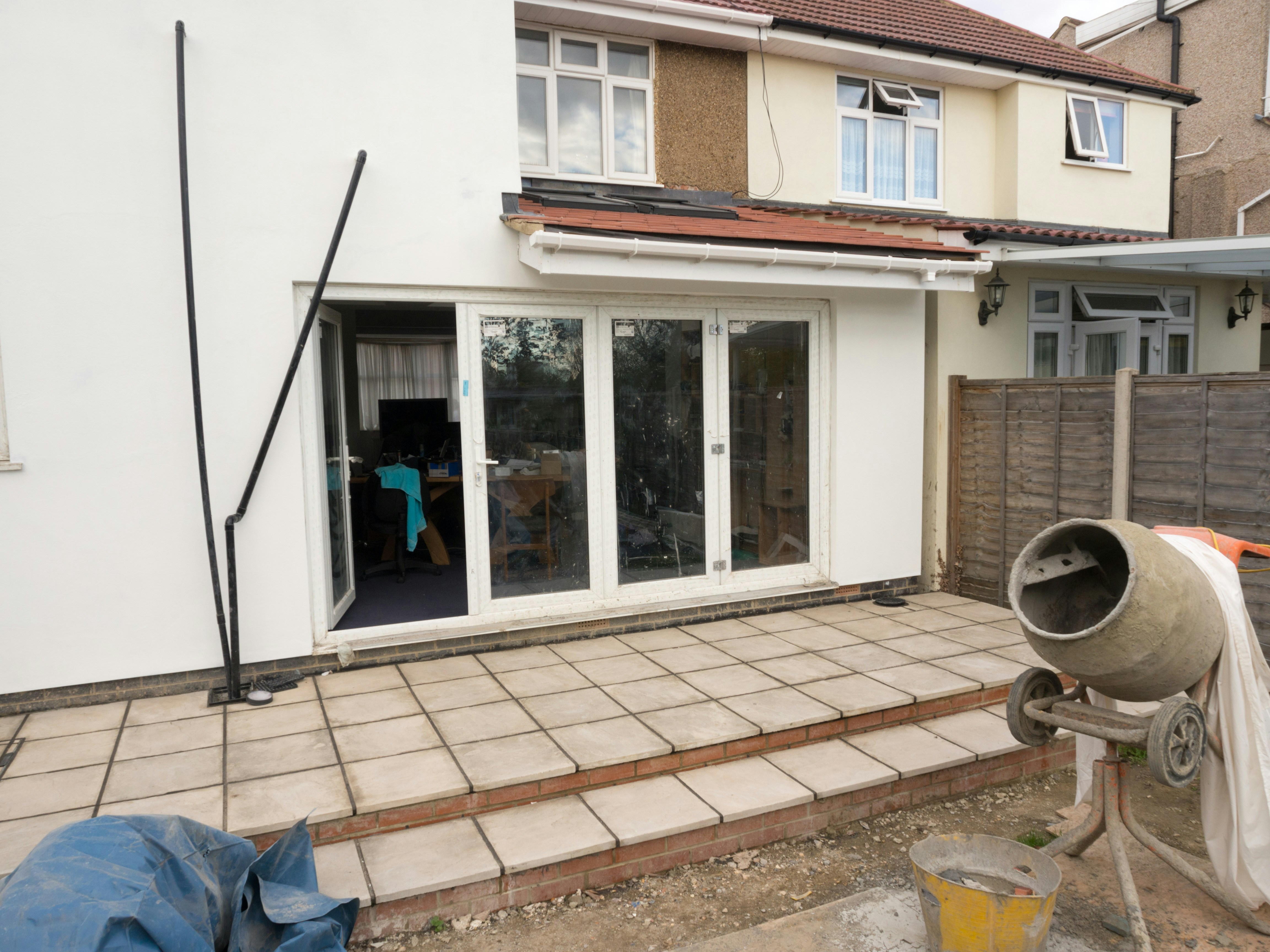
The quick answer
Build-only means you appoint designers (and often planning consultants) separately, then tender construction to a builder on completed drawings. Design & build means one company carries survey, design, approvals strategy, engineering and construction under a single contract.
Build-only is not automatically cheaper. It works when drawings are complete, coordinated and buildable. Design & build often saves money overall on typical homeowner extensions because it cuts redesign loops, route mistakes, and gaps between trades — the main sources of cost creep. Compare indicative build costs with our cost estimator; compare programmes with the timeline planner.
How build-only is supposed to work
- You hire an architect or technician for survey and plans.
- You secure planning / PD / LDC (sometimes with a planning consultant).
- A structural engineer designs steels and foundations.
- You tender to builders with a specification and drawings.
- The builder executes; variations handle what drawings missed.
When it saves money: competitive tender on a perfect package, you manage professionals confidently, and the project is simple (single-storey rear box, clear PD route).
When it costs more: drawings lack detail (kitchen M&E, glazing spec), PD compliance was assumed not proven, steel positions clash with bi-fold headers, builder prices exclusions that another firm includes — then lowest tender is not lowest outcome.
How design & build works
One contractor (like Maven) delivers:
- Feasibility — PD vs planning, LDC strategy
- Survey and coordinated design — architecture + structure aligned
- Approvals — submissions and responses
- Build — single programme, single point of accountability
- Building control — inspections booked as part of programme
Price is often fixed or defined after concept and survey, not from a vague per-sqm guess.
When it saves money: terraced/semi extensions with party wall, wraparound forms, loft structural complexity, or any project where route and structure must align early.
When it costs more on paper: you pay one margin on the whole scope instead of splitting fees — but you buy fewer surprises.
See delivered work on projects.
Side-by-side comparison
| Factor | Build-only | Design & build | |--------|-----------|----------------| | Upfront quote clarity | Low until designs complete | Improves after survey/concept | | Planning risk | Often on you + designer | Shared with builder | | Coordination | You or architect manage | Contractor owns | | Variations | Common at steel/glazing stage | Lower if scope locked early | | Programme | Gaps between teams | Continuous | | Best for | Experienced clients, simple jobs | Most homeowners, complex sites |
Where build-only projects lose money
Incomplete PD check — building then needing retrospective planning. Use PD Quick Check early; confirm with LDC or permission.
Structural vs architectural mismatch — steel too low for bi-fold, steels in kitchen run, chimney not accounted for. Reorder steel = delay + £££.
Specification gaps — builder excludes kitchen, UFH, making good, external drains. Compare like with like.
Party wall late — notices after contract start. See party wall checklist.
Rescue premiums — taking over a stalled build-only job costs more. Example narrative: Dartford rescue extension.
Where design & build saves money
- One survey used for PD, structure and build — no remeasure disputes.
- Early route lock — avoids drawing twice for planning refusal.
- Procurement — long-lead items ordered once specification is real.
- Accountability — no “ architect said / builder said ” on site.
- Programme — week-by-week timeline held by one team.
Maven credits consultation fees toward design/build when you proceed — lowers the cost of getting route right upfront. Book here.
Can you hybrid?
Some clients appoint an architect for concept, then hand to design & build for technical design + build. Works if roles and fees are clear at handover — poor handover recreates build-only gaps.
Others use design & build for shell and fit kitchen themselves — specify that boundary in contract.
Questions to ask before you choose
- Are my drawings building control ready or concept only?
- Is my planning route proven (LDC, permission, or written PD opinion)?
- Who coordinates party wall and building control?
- What is excluded from the builder’s price?
- What is my contingency if the lowest tender has five pages of exclusions?
Financial reality in 2026
Mid-spec rear extensions run £2,200–£3,200/sqm all-in on design & build — see rear extension costs. Build-only tenders might show £1,800/sqm then add kitchen, glazing, steels, and variations.
Compare total cost at completion, not headline tender.
Next steps
- Model budget: cost estimator
- Model programme: timeline planner
- Compare routes: PD vs planning
- Book a consultation — we will say honestly if build-only suits your project or integrated delivery is safer.
Frequently asked questions
- Is build-only cheaper than design and build?
- Build-only can look cheaper on the builder’s tender if you already have complete, coordinated drawings. Hidden costs appear when designs are incomplete, routes change, or gaps between designer and builder cause rework.
- What does design and build include?
- One contractor responsible for survey, design, approvals strategy, structural engineering, construction and often building control liaison — single programme and price clarity after scope is fixed.
- When is build-only a good idea?
- When you have an experienced architect, resolved planning route, coordinated structural package, and a builder you trust to price complete information — common on repeat clients or simple shells.
- Who owns design errors in design and build?
- The design & build contractor — reducing disputes between separate designer and builder. Variations still apply if you change specification after contract.
- Can I switch from build-only to design and build mid-project?
- Yes, but rescue projects often cost more — see rescue case studies. Starting with one accountable team is usually cheaper than fixing coordination failures later.
Book a consultation for route, budget and timeline advice tailored to your house — or use our free tools first.